
Why doesn’t the media show us love in the time of cholera? Or love in the time of being poor?
I couldn’t resist the temptation of hijacking the remarkable title of the great Gabriel Garcia Marquez, although my reflections are not about trials of life, but about love between two people who have little money.
Amidst dense traffic, a couple gets off the bus in an Indian city and the man holds the hand of the woman very tightly. I assume they’re husband and wife. Love so visible – shielding her from the perils of the road. They don’t look like a couple with much money.
Love is always a beautiful thing but even more so when its not about Hollywood couples kissing in aquamarine swimming pools while sipping bubblies.
Why are we mostly surrounded by visual mediums that show love under the Eiffel Tower or in some quaint Provençal cafe? Or in Californian homes showcasing panoramic views, with giant potted ficus that cost more than a whole month’s salary for some people in the world?
Love, like death, knows no class divides. Love is an equalizing emotion. I tried to find data online about marriage and love in people not rich and famous, rather, the regular lot. No substantial data. And virtually no data about successful unions in people under a certain financial bar. I used marriage as an indicator not for accuracy, but for convenience.
India is a canvas of people of all economic classes and it’s a society where you’re surrounded by people all the time – help, pedestrians, shopkeepers, newspaper men, security guards. All of them talk to you and interact at length. It’s a window into the world of people who don’t own homes, cars or even have survivable monthly income.
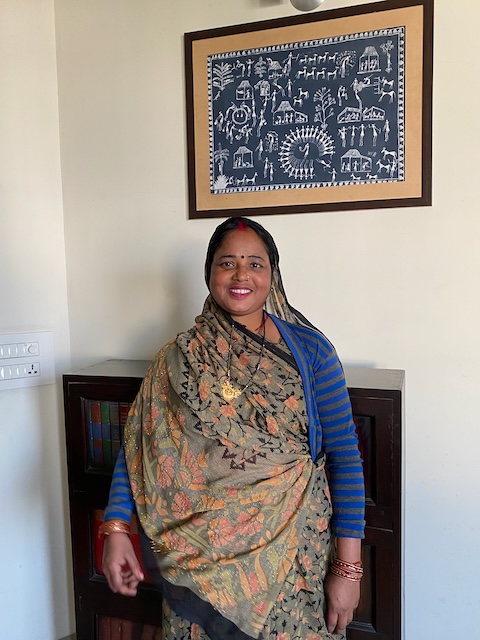
I had some repairs done at my home in Chandigarh. A mason and his wife showed up and worked for 15 long days. The wife, a beautiful woman named Ramkali, came everyday and diligently assisted him in his skilled work. The affinity between them was evident. She looked self-possessed and content with her life. They went to the roof at lunch break and shared their roti under the winter sun. He worked, she cleaned, and was proud of the team work. They said, there’s hardly any money in the farm work in their villages. Their kids barely get 3 dollars a day for working the fields. I saw the camaraderie and love. Bricks and cement and love in fixing homes they don’t own and will never do.
I went to the famous Rose Garden for a walk and found a couple picnicking there. She was posing next to the roses and shivering; her sweater was full of holes. He wore a knock-off Tommy puffer jacket. After taking the photo, he took off his jacket and wrapped it around her, much to her protests. Love amongst threadbare sweaters was much more beautiful than the roses that surrounded me.
I saw many such vignettes of love. On dusty footpaths, in public parks, in roadside tea stalls, in maddeningly crowded public buses. And that made me think about all the mediums of entertainment that bombard us about stories of love. Serendipitous meeting at the opera, lost and found love at a ski resort, love in golden years on a trip to Scandinavia, love on an archaeological dig, and many such tales.
How come we don’t see love stories of the people who have access to no healthcare or breakfast buffets? Their love is just as profound, just as magnificent.
The photo here is of Ramkali, the heroine of her love story.
Love Life Satisfaction Around the World – This IPSOS analysis shows the indicator “Feeling Loved” is pretty high (based on a 31 country average) in countries that aren’t prosperous. Hah!
https://www.ipsos.com/sites/default/files/ct/news/documents/2024-02/Lovelifesatisafaction_6draft.pd

1 comment
Such a beautifully profound question, somehow we don’t acknowledge, or mostly ignore ordinary mundane love, beauty, excellence, especially in economically weaker people.
So well written Sree, it make one think!